Previous article
Bitcoin has regained its 'kimchi premium' in the Korean market – what does this mean?
Сryptocurrency
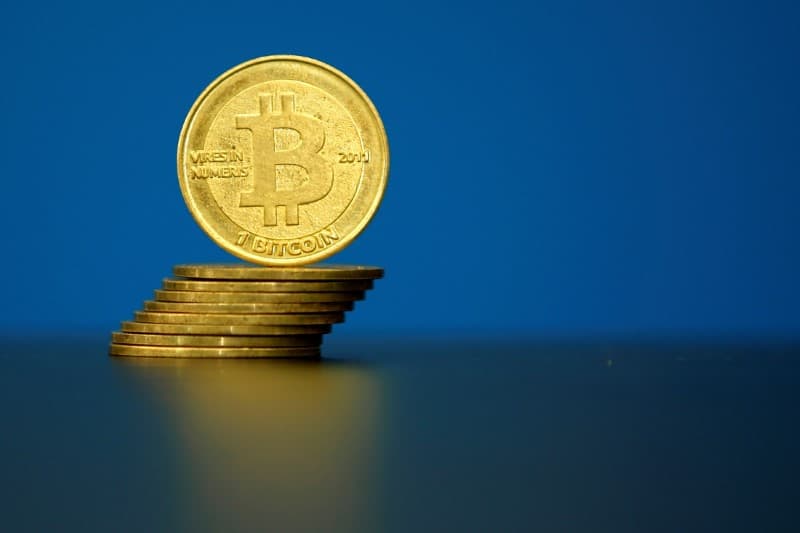
Bitcoin is trading at a premium again in South Korea after
its price surge revived risk appetite in one of the most closely watched retail crypto markets, Bloomberg reports.
The won-denominated Bitcoin price on Upbit, South Korea's largest crypto exchange owned by Dunamu Inc., showed a premium of about 1% on Tuesday over the dollar price on Binance Holdings Ltd. The world's largest cryptocurrency has been trading at a premium in Korea for a week now, the longest streak since early May.
Known as the "kimchi premium," the gap between Bitcoin prices on South Korean exchanges and global markets is considered a key barometer of retail investor sentiment in Asia. Its recurrence in the past has foreshadowed further Bitcoin gains, said Rachel Lucas, an analyst at BTC Markets.
"Korean retailers tend to actively buy in risk-on phases, and due to capital controls, these purchases manifest as price gaps rather than arbitrage flows," Lucas said. "Historically, discount-to-premium transitions have preceded stronger Bitcoin returns in subsequent weeks."
The return of the premium comes as Bitcoin enters September at around $78,000, having briefly exceeded $80,000 last month for the first time since May. Prices rose in August on the back of renewed optimism and the US Treasury's decision to increase its purchase of long-term Treasury bonds, leading to Bitcoin's strongest monthly gain since November 2024.
As prices rose, appetite for spot Bitcoin ETFs traded in the US returned. These funds attracted approximately $1.92 billion in the week of August 17—the strongest weekly inflow in 10 months. Last week, they attracted another $923 million, although a $203 million outflow on August 28 broke a nine-day streak of inflows.
Flows into US ETFs increasingly reflect institutional demand, but the price gap on South Korean exchanges has historically been driven by domestic retail buying. The spread may persist, as local capital controls and other financial regulations make it difficult to quickly arbitrage price differences.
Nevertheless, the kimchi premium is susceptible to speculative frenzy and does not guarantee a new round of growth.
While the kimchi premium has turned positive, "without a corresponding increase in spot volumes, we do not believe Korea will be the main driver in the initial phase of Bitcoin's recovery, as many Korean traders remain focused on AI stocks," said Markus Thielen, head of 10x Research.
Until recently, the signal from South Korea pointed in the opposite direction. Bitcoin traded at a discount in the country for much of the summer, reaching 3.1% below international prices in early June, according to Upbit. The average discount for August was 0.25%.
Given that ETF flows had already weakened in late August, the rally in South Korea could prove to be a short-lived bout of retail enthusiasm.
"Korea's share of global Bitcoin trading volume remains modest, so this is a small signal—a weakening of Korean selling pressure, not a new wave of FOMO," Lucas said. "Institutional flows and flows into US ETFs continue to dominate price dynamics."