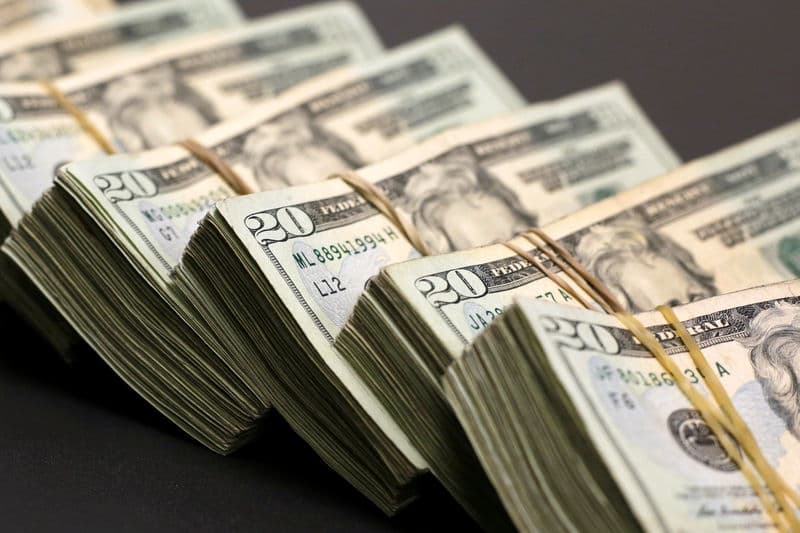
Global central banks expect the dollar's share of global reserves to decline over the next five years, but plan to increase their gold holdings.
This follows from the annual Central Bank Gold Reserves Survey 2026 by the World Gold Council (WGC) and YouGov. Seventy-six central banks worldwide participated in the survey, which was conducted anonymously from February to May 2026. This represents a record number of participants in the nine-year observation period.
Gold: Record Demand
45% of respondents expect their own gold reserves to increase in the next 12 months, a historical high for the survey period. Eighty-nine percent believe that global central bank gold reserves will increase overall over the same period. Over a five-year horizon, 84% expect gold's share of total reserves to be higher than it is now, compared to 76% a year earlier. Reserve diversification leads the list of reasons for increasing purchases: 31 of 34 banks planning to increase their gold reserves in the coming year cited this. Next come the need for a hedging instrument—against inflation, dollar fluctuations, and market instability (23 of 34)—and the growing economic risks in reserve currency countries, including the widening budget deficit in the US (also 23 of 34). According to the WGC, over the past four years, central banks have purchased an average of 1,000 tonnes of gold per year—double the 500 tonne average of the previous decade.
The authors also note that most responses were received after the outbreak of armed conflict in the Middle East, and this is reflected in the results. Geopolitical instability overtook inflation as a factor influencing reserve management for the first time this year. Among central banks in developing countries, 95% cited geopolitics as a relevant factor, compared to 67% among banks in developed economies. Regarding financing new purchases, half of the banks planning them intend to do so through domestic purchase programs in national currencies, 38% by selling existing reserve assets, and 32% from newly accumulated reserves.
Dollar and Yuan
According to the IMF, the dollar accounts for 42% of total global reserves as of the third quarter of 2025. However, 74% of survey respondents expect its share to be lower than its current level in five years. Some respondents believe that the decline in the dollar's share will primarily affect countries whose relations with the US could be complicated by American foreign policy. However, respondents acknowledge that the liquidity and depth of the dollar asset market still significantly exceed alternatives.
Regulators' expectations for the euro and yuan were generally neutral: most respondents do not expect a change in their share. Fifty-three percent believe the yuan's share will remain at its current level of 1% of reserves.
Where to store?
The Bank of England remains the most popular gold storage location, cited by 57% of respondents. Domestic storage ranks second at 49%, down from 59% a year earlier. The Bank for International Settlements (BIS) was chosen by 16% of respondents, while the Swiss National Bank has lost popularity, with its share falling from 12% in 2025 to 6%.
Furthermore, in 2026, 20% of respondents chose not to answer the gold storage location question, down from 8% a year earlier. The WGC acknowledges that this may have influenced the distribution of the remaining responses, but does not provide a reason for this.
According to the survey, central banks are increasingly diversifying their gold storage locations. Over the past year, 9% of central banks increased their share of domestic storage, and 10% expanded their overseas storage locations, up from 5% and 2%, respectively, a year earlier. Seven percent of respondents plan to increase domestic storage in the next 12 months, while 9% plan to diversify their overseas storage locations.