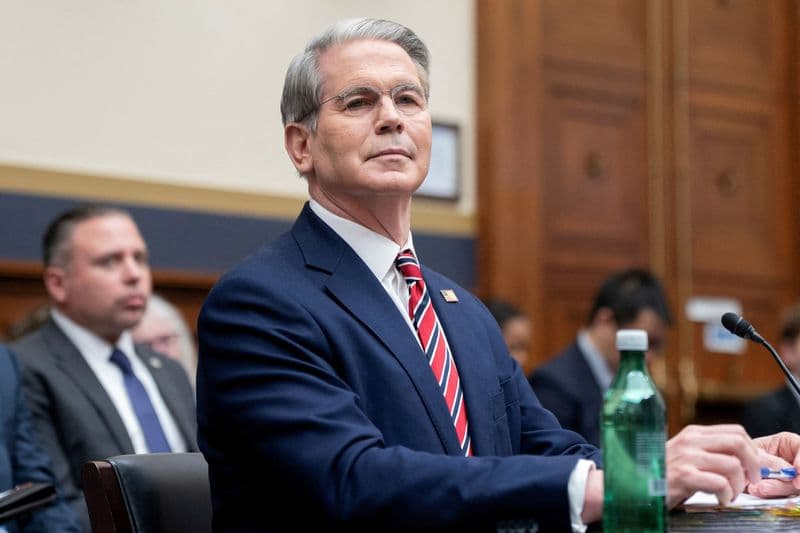
U.S. Treasury Secretary Scott Bessent stated on Tuesday that the U.S. deployed only a nominal amount as part of a coordinated intervention to support the Japanese currency.
Testifying before the House Financial Services Committee, he defended the operation as being in America's interest.
Bessent noted that a stronger yen benefits U.S. exports and means the Japanese government would not need to sell U.S. assets to fund currency interventions. The U.S. Treasury joined Japan in buying yen on July 31, after the Japanese currency had fallen to a four-decade low against the dollar.
Experts monitoring Treasury actions estimated that the department spent significantly less than $1 billion during the intervention to support the yen. Japan spent a record $96.4 billion between late July and late August. Tokyo deployed record sums in its own yen purchases through operations that involved selling dollars and, likely, U.S. Treasury bonds. Japan is the largest foreign holder of U.S. government securities.
Bessent stated that the Treasury managed to demonstrate support for Japanese policy with a nominal sum. He also added that the department earned tens of millions of dollars on the yen operations, although that was not the objective.
In recent weeks, the Treasury Secretary has repeatedly signaled that he would like to see the Bank of Japan raise interest rates to support the yen. The Bank of Japan is holding a monetary policy meeting later this week.
Last week, speaking at an event at Southern Methodist University in Texas, Bessent stated that he had information regarding the actions the Bank of Japan and Japanese policymakers would take. "And you can bet against me if you want," he said.
In a letter responding to questions from Democratic Senator Elizabeth Warren last month, Bessent wrote that chaotic fluctuations in the yen market could trigger forced position closures, potentially destabilizing global markets and raising borrowing costs for American families and businesses.