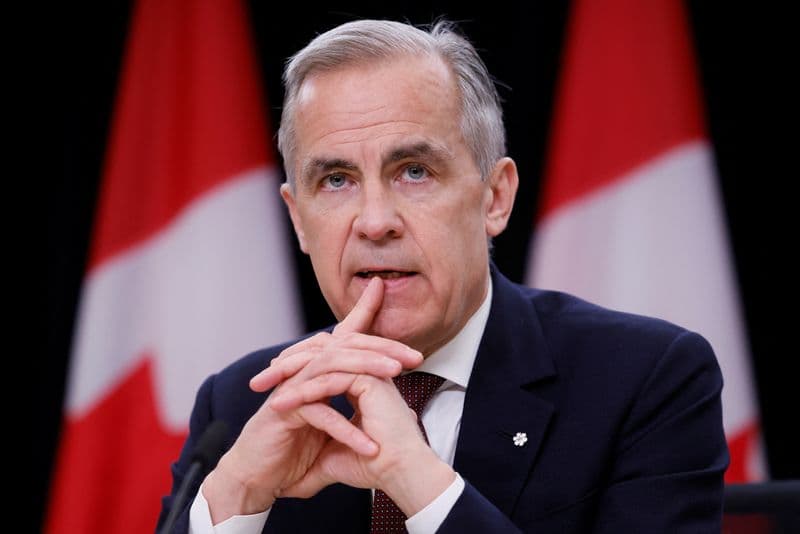
Canada will impose mirror tariffs in response to new US dollar-for-dollar tariffs starting September 8,
Prime Minister Mark Carney announced on Saturday, after negotiations between the two countries stalled and Washington imposed 50 percent duties on a wide range of Canadian goods.
The US imposed 50 percent tariffs on $20 billion worth of Canadian goods early Saturday morning after negotiations failed to resolve tensions between the two countries.
Canada's retaliatory measures will take effect on the Tuesday after Labour Day and affect sectors such as steel, dairy products, appliances, farm equipment, pulp and paper, and electronics, Carney said.
"They demanded too much and offered too little," Carney said, referring to Washington's final demands.
US Trade Representative Jameson Greer told reporters late Friday that Canada had refused to finalize the trade deal under the terms agreed upon earlier in the week.
On Saturday, Greer stated on Fox News that "there are no new planned negotiations with the Canadians." He said the US is "moving forward with measures in response to Canada's retaliatory actions," and Washington's interest is "protecting American workers and American supply chains."
Carney stated that Canada was prepared to lift the remaining retaliatory tariffs on steel, aluminum, and automobiles if the US significantly reduced its own tariffs, and also to assist provinces in restoring sales of American alcohol.
Carney stated that he suspended the negotiations and instructed the Canadian delegation to return to Ottawa after the US side changed the terms of the proposal at the last minute, calling them "unfair" and "economically unviable," adding that these changes "called into question the credibility of any agreement."
Trump's import tariffs will affect approximately 5% of all Canadian exports to the US, including goods ranging from hockey sticks to medical spatulas. Last year, trade between Canada and the United States amounted to $880 billion.
The tariffs were initially scheduled to take effect at 8:01 a.m. Moscow time on Wednesday, but Trump extended the deadline by three days to allow negotiations to continue.
The two countries failed to reach an agreement. Earlier in the week, Carney stated that "significant progress has been made, although much important work remains"—a reversal from the position two days earlier, when representatives of both countries indicated they were close to a compromise.
The Trump administration currently imposes a 10% tariff on goods from Canada—the United States' second-largest trading partner after Mexico—even though most Canadian goods are exempt from tariffs under the United States-Mexico-Canada Agreement (USMCA).